Andersonville
Swedish roots. Independent spirit. Very little interest in becoming generic.
Andersonville is a North Side neighborhood with an unusually clear sense of itself. Centered along Clark Street within the larger Edgewater community area, it combines historic homes, independent businesses, destination dining, and one of Chicago’s most established LGBTQ+ communities. The streets feel residential and settled, while the commercial corridor remains lively without becoming exhausting. Housing ranges from vintage condominiums and classic two- and three-flats to frame cottages, greystones, and thoughtfully updated single-family homes. It is polished, but not overly produced. In Chicago, that is a meaningful distinction.
A Neighborhood With a Memory
Andersonville’s Swedish identity dates to the decades following the Great Chicago Fire, when Swedish immigrants moved north from areas closer to the city center and established a community around what is now Clark Street.
The neighborhood became known as Chicago’s “Little Sweden,” and that history remains visible through the Swedish American Museum, traditional celebrations, architectural details, and the blue-and-yellow water tower that has become a local landmark. Andersonville’s annual Midsommarfest continues the connection, although the neighborhood has evolved well beyond any single cultural identity.
Today, Andersonville is more diverse, more design-conscious, and perhaps slightly more interested in an excellent cocktail than its early residents anticipated. Still, the underlying character has held: locally rooted, socially engaged, and fiercely protective of the businesses and institutions that make the neighborhood distinct.
In 2010, much of the Clark Street corridor was added to the National Register of Historic Places as the Andersonville Commercial Historic District. That recognition helps explain why the street still feels like a neighborhood main street rather than a collection of unrelated storefronts.
Clark Street Is the Center of Gravity
Clark Street is where Andersonville announces itself.
The corridor is lined with independent boutiques, restaurants, cafés, bakeries, home stores, antique shops, neighborhood bars, and businesses whose owners are often still somewhere inside the building. It is possible to buy furniture, meet someone for lunch, find a birthday gift, pick up groceries, and have a drink afterward without moving the car. In fact, moving the car may be the least appealing part of that plan.
The commercial district feels active throughout the day. Mornings belong to coffee shops and dog walkers. Afternoons bring shoppers and lunch crowds. Evenings shift toward restaurants, patios, bars, and neighborhood gathering places.
This is not nightlife in the Wrigleyville sense. Andersonville is lively, but generally prefers conversation to chaos.
Living in Andersonville
Residential Andersonville begins almost immediately beyond Clark Street.
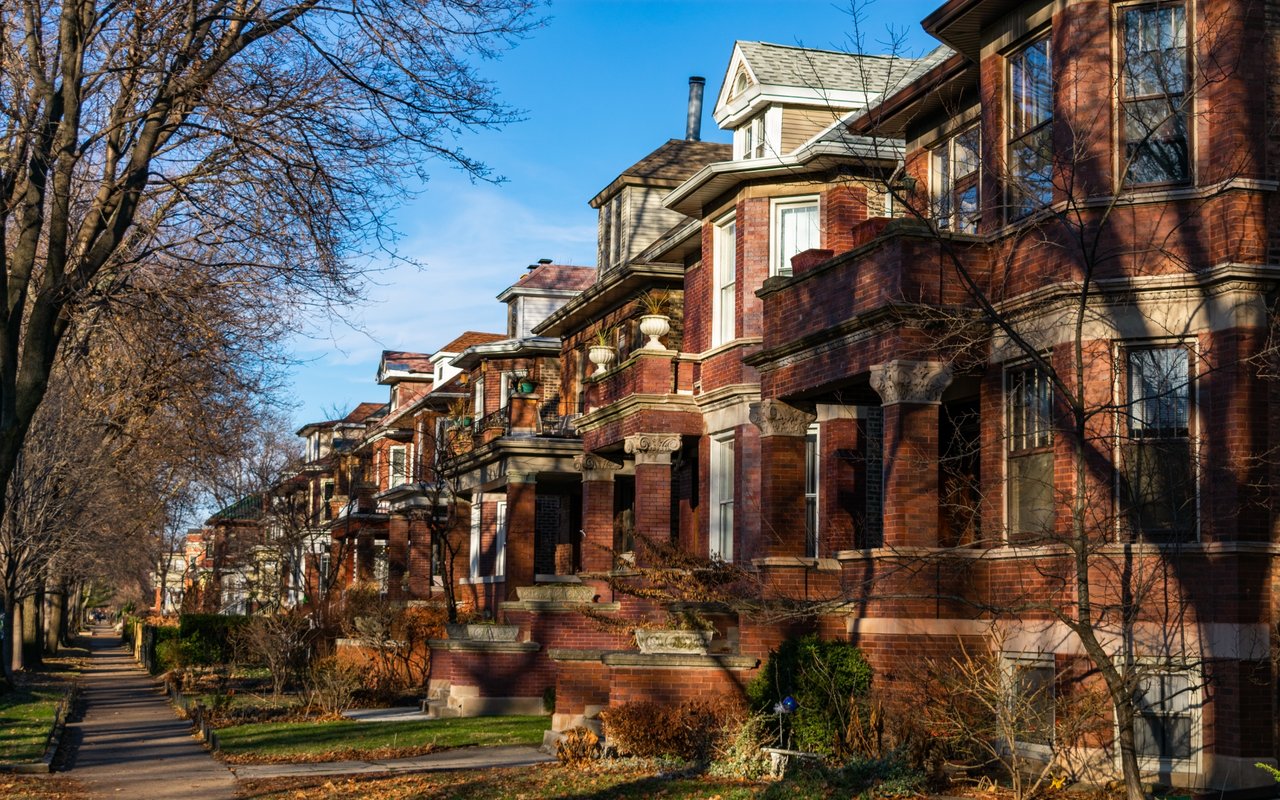
Tree-lined blocks contain a mix of brick two- and three-flats, greystones, courtyard buildings, frame cottages, vintage apartment buildings, newer condominiums, and single-family homes created from both original houses and converted multifamily properties.
Many homes retain the details people hope to find in Chicago architecture: built-ins, millwork, fireplaces, sunrooms, formal dining rooms, bay windows, and hardwood floors. The usual disclaimer applies. “Vintage character” can mean beautiful craftsmanship, or it can mean the electrical panel would like a private word with you.
New construction and major renovations have gradually expanded the housing mix, but Andersonville has preserved more architectural continuity than neighborhoods where redevelopment occurred on a much larger scale.
Buyers are often drawn here because the neighborhood offers a genuine residential environment without sacrificing walkability. It attracts people who want city life, but do not necessarily need city life shouting through the window at 2:00 a.m.
Parks, Recreation and Everyday Life
Andersonville is surrounded by useful neighborhood green space rather than one single defining park.
Residents are near Winnemac Park to the west, lakefront parks and beaches to the east, and smaller playgrounds and community spaces throughout Edgewater. The Lakefront Trail, Foster Beach, and Kathy Osterman Beach are also within reach from the eastern side of the neighborhood.
The area is particularly comfortable for walking and biking. Daily errands can often be handled along Clark Street, while nearby Broadway provides additional grocery stores, services, restaurants, and transit connections.
Community events remain an important part of neighborhood life. Midsommarfest is the best-known, but seasonal markets, neighborhood celebrations, arts programming, and small-business events keep the district active throughout the year.
Schools and Transportation
Peirce International Studies School is one of the notable Chicago Public Schools serving the broader Andersonville and Edgewater area. Peirce offers International Baccalaureate programming through the Primary and Middle Years levels.
Depending on the exact property address, buyers may also encounter attendance boundaries for Chappell, Goudy, McCutcheon, or other nearby CPS schools. Chicago school boundaries can change from one side of a street to the other, so enrollment eligibility should always be verified for the specific property rather than assumed from the neighborhood name.
Andersonville is also particularly appealing to families considering private or alternative education. Rogers Park Montessori School is located directly in the neighborhood and serves children from age two through 14. Despite its geographically confusing name, this one is, in fact, in Andersonville.
Nearby Lycée Français de Chicago offers a multilingual, international education from pre-K through Grade 12. Its proximity makes Andersonville a popular residential choice for families connected to the school or seeking a bilingual and globally focused education.
Transportation options include the Red Line east of the neighborhood, the Ravenswood Metra station to the west, and several CTA bus routes along Clark, Foster, Ashland, Broadway, and nearby north-south corridors.
The result is a neighborhood that works well for downtown commuters, reverse commuters heading toward the North Shore, and residents who would simply prefer not to structure every errand around parking.
Buying or Selling in Andersonville
Andersonville appeals to a wide range of buyers, but the housing stock is not interchangeable.
A renovated condominium near Clark Street may compete in a different market than a vintage unit farther east. A legal two-flat, a converted single-family home, and a frame cottage with expansion potential each require a different understanding of condition, zoning, renovation costs, and long-term value.
Parking, outdoor space, building reserves, mechanical updates, and the quality of prior renovations can materially affect pricing. Buyers should also pay close attention to whether a property’s charm has been preserved thoughtfully or merely photographed strategically.
Well-located homes with strong layouts and meaningful outdoor space can be difficult to replace. Inventory is often limited, particularly among renovated single-family homes, wider-lot properties, and vintage residences that retain original detail without requiring immediate structural diplomacy.
Some Andersonville opportunities also sell privately or through agent networks before reaching the broader public market.
Explore Andersonville Homes
Searching publicly is a good start. Access to private and off-market inventory can reveal considerably more.
Ask Me About Andersonville
Whether you are comparing blocks, evaluating a vintage property, preparing a home for market, or trying to understand what actually commands a premium here, local context matters.
Andersonville at a Glance
Location: Chicago’s North Side, within the Edgewater community area and centered along Clark Street
Neighborhood feel: Walkable, welcoming, independent, established, and quietly design-conscious
Housing: Vintage condominiums, courtyard buildings, two- and three-flats, greystones, frame cottages, converted and original single-family homes, and selective new construction
Known for: Swedish heritage, independent businesses, restaurants, Midsommarfest, historic architecture, and a prominent LGBTQ+ community
Transportation: CTA Red Line access, Ravenswood Metra service, multiple bus routes, and strong bike connectivity
Nearby: Edgewater, Ravenswood, Bowmanville, Uptown, Lincoln Square, and the lakefront
Market character: Desirable and inventory-conscious, with particularly strong competition for well-renovated homes, outdoor space, parking, and architecturally intact vintage properties