Why West Town’s Two-Flats Skipped the ADU Debate Everyone Else Is Having
The 34-ward map made headlines. For many West Town two-flats, three-flats and greystones, the more important map was the zoning map all along.
If you own a two-flat in Noble Square, a three-flat in Ukrainian Village or a greystone somewhere off Division Street, you probably absorbed one number from the coverage of Chicago’s new Additional Dwelling Unit ordinance:
34 of 50 wards.
When Chicago’s expanded ADU ordinance took effect April 1, 2026, WTTW reported that 34 of Chicago’s 50 wards had become eligible for some form of ADU development.
That made for a good headline.
For many West Town property owners, though, it missed the more important point.
Because Chicago’s permanent ADU rules distinguish between properties in single-family RS zoning and those already sitting in multi-unit residential districts. The City’s new Additional Dwelling Unit program permits ADUs by right in multi-unit residential and certain other zoning districts, subject, of course, to the building, lot and permitting requirements that follow.
And West Town has a lot of those buildings.
The ordinance may be new.
The building type is not.
West Town Was Doing “Gentle Density” Before It Had a Name
Long before planners started talking about missing middle housing and gentle density, Chicago was building neighborhoods full of exactly that.
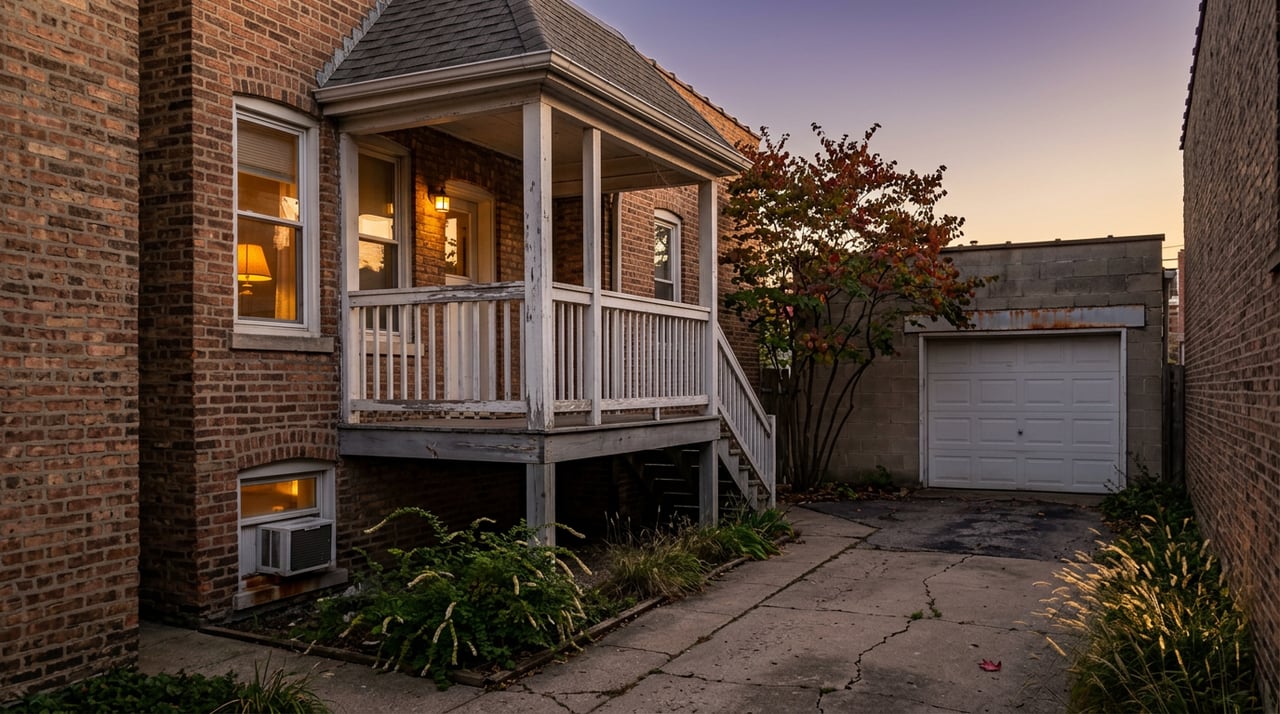
Workers’ cottages. Two-flats. Three-flats. Greystones. Small apartment buildings.
West Town is one of the clearest examples.
The Ukrainian Village Chicago Landmark District contains what the City describes as an exceptionally well-preserved collection of workers’ cottages, two- and three-flats, single-family residences and larger apartment buildings dating largely to the neighborhood’s late-19th- and early-20th-century development.
In other words, West Town did not need a planning symposium to discover small-scale density.
It has been quietly doing it for more than a century.
And that existing housing pattern is exactly why the new ADU conversation lands a little differently here.
Can You Build an ADU in West Town?
In many cases, yes, but eligibility starts with the individual property’s zoning.
Properties in qualifying multi-unit residential zoning districts may be eligible for an ADU by right under Chicago’s expanded ordinance. RS-zoned properties follow different rules, which is why the first step is not looking at the neighborhood name or even the ward.
It is looking up the address.
The City’s ADU Eligibility page explains which zoning districts qualify. To check the zoning of a specific property, start with Chicago’s Zoning information page, which links directly to the City’s interactive zoning map.
That matters in West Town because two buildings that look nearly identical from the sidewalk do not necessarily have identical zoning or development options.
Your greystone does not qualify because it is a greystone. Your two-flat does not qualify simply because the building next door does.
The parcel matters.
How Many ADUs Can a Chicago Property Add?
Chicago recognizes two primary types of Additional Dwelling Units:
A conversion unit is created inside an existing principal residential building, typically in a basement or attic.
A coach house is a separate accessory residential structure, generally toward the rear of the property.
For conversion units, Chicago generally allows additional density equal to 33% of the building’s existing lawful dwelling units, with fractional results rounded according to the zoning code. A lawful single-unit building receives a specific allowance for one additional conversion unit.
In practical terms:
- 1 to 4 existing units: generally one ADU
- 5 to 7 existing units: up to two ADUs
- 8 to 10 existing units: up to three ADUs
- 11+ units: the approximately 33% calculation continues
You can read the underlying density provision in the Chicago Zoning Ordinance.
For the owner of a typical West Town two-flat or three-flat, that means the decision is generally not:
Should I add a basement unit and a coach house?
It is more likely:
If I can add one additional dwelling, which option creates the most value?
And that is a much more interesting real estate question.
Coach House or Conversion Unit?
On paper, both create another legal residence.
In practice, they can be completely different projects.
A conversion unit must be created within a principal residential building that has been in lawful existence for at least 20 years.
A coach house does not carry that same building-age requirement, but it comes with its own site constraints. Chicago limits coach houses to one dwelling unit and a maximum height of 22 feet, along with requirements involving building separation, open space and accessory structures.
The City summarizes the current rules on its ADU Requirements page, while the detailed coach-house provisions can be found in the Chicago Zoning Ordinance.
There is also a contractor consideration.
For a permit to build a coach house, Chicago requires the applicant to commit to using a general contractor and applicable subcontractors participating in federally registered apprenticeship programs for the trades performing the work. The requirement is contained in the City’s Additional Dwelling Unit Ordinance.
So:
I already have a garage. I’ll just put an apartment above it.
…is a thought.
It is not yet a feasibility study.
Permitted and Profitable Are Not Synonyms
This is the part of the conversation I think matters most for property owners.
A property can be legally eligible for an ADU and still have an ADU project that makes very little financial sense.
A garden unit can be an excellent investment when the existing building already offers usable ceiling height, appropriate access, manageable mechanical locations and a floor plan that lends itself to conversion.
Take another basement and suddenly you are talking about drainage, excavation, underpinning, egress, moving utilities, rebuilding stairs and relocating mechanical systems.
That “unused basement” can become some of the most expensive square footage you have ever met.
A coach house creates a different equation. It may offer a desirable separate residence and meaningful rental income. It may also require substantial capital, consume parking or yard space and ultimately add less resale value than the owner expected.
This is where zoning stops being the only question.
Before committing six figures to a project, I would want to understand:
What can legally be built?
What will it actually cost?
What income could it reasonably generate?
How does it change the functionality of the property?
And what is the West Town resale market likely to give you back?
That last question matters.
Because an improvement can be beautiful, legal and useful without necessarily producing a dollar-for-dollar return.
That is the difference between design and Design ROI.
What If the Property Is in a Landmark District?
West Town adds another wrinkle because portions of Ukrainian Village are protected within a Chicago Landmark District.
The Ukrainian Village Landmark District has irregular boundaries roughly bounded by Haddon, Damen, Rice and Western and contains many of the historic residential buildings that make this part of the neighborhood so recognizable.
Landmark status does not automatically prohibit an ADU or coach house.
It does mean that qualifying exterior work and new construction may require review through the Commission on Chicago Landmarks as part of the City’s normal permit process. The City explains that process in its Landmark Permit Review guidance.
So once again, there can be more than one answer to:
Can I build this?
Zoning may say yes.
The lot still has to work.
The building still has to work.
And, where applicable, landmark review still has to work.
Better to know all of that before falling in love with the rendering.
Will an ADU Affect Your Property Taxes?
Potentially.
A legal additional dwelling can add value to a property, and any meaningful improvement should be considered as part of the owner’s future property-tax picture.
Cook County offers a Home Improvement Exemption for qualifying residential improvements. It can currently exempt up to $75,000 of added value for up to four years, subject to the Assessor’s eligibility requirements.
That does not mean an owner should look only at the potential new rent and declare victory.
Construction cost, financing, taxes, insurance, maintenance and resale all belong in the analysis.
Revenue is only half the spreadsheet.
Can You Use a Chicago ADU as an Airbnb?
No.
Chicago’s ADU rules prohibit these units from being used for compensated transient occupancy. The intent is residential housing, not another short-term rental strategy.
The City’s current restrictions are outlined on its ADU Requirements page.
There is also an affordability requirement when two or more ADUs are added to a property. In that situation, Chicago requires a portion of the newly created units to meet affordability requirements tied to area median income. The City explains those requirements on its ADU Affordability page.
For most West Town owners contemplating a single ADU in an existing two-, three- or four-flat, however, that is not likely to be the question driving the project.
The investment itself is.
One More Ordinance West Town Owners Should Have on Their Radar
And because apparently owning a Chicago two-flat now comes with required reading, there is another housing ordinance worth understanding.
Chicago’s Northwest Side Housing Preservation Ordinance created several separate preservation rules, including the Tenant Opportunity to Purchase Block (606) District Pilot Program.
Where the 606 rules apply, tenants of covered rental properties receive specific notice and right-of-first-refusal protections when an owner intends to sell.
That is an entirely different issue from ADU eligibility.
Think of it this way:
The ADU ordinance asks: What may I be able to add while I own the property?
Tenant purchase and preservation rules ask: What requirements may apply when I eventually sell it?
Coverage is property-specific, so this is another situation where relying on “it’s in West Town” is not enough.
The City maintains current information, maps, forms and program details on its Northwest Side Housing Preservation Ordinance page.
I’ll go deeper into the 606 Tenant Opportunity to Purchase rules in an upcoming blog, including what owners, sellers and buyers should understand before an occupied multifamily property reaches the market.
For today, back to the ADU.
Is Building an ADU Worth It in West Town?
Sometimes.
And sometimes the smartest thing an owner can do is leave the building alone.
That is what gets lost when a zoning change generates excitement.
The ordinance expanded what Chicago property owners can do.
It did not make every available project a good investment.
West Town’s two-flats, three-flats, workers’ cottages and small apartment buildings already give owners something much of Chicago is now trying to create: flexible, small-scale residential density embedded into established neighborhood blocks.
The opportunity is real.
So are the costs.
Which brings us back to the distinction I would keep in mind before doing anything:
Permitted and profitable are not synonyms.
The better questions are:
What does my zoning allow?
What does my building physically support?
What will it cost to do properly?
How could it affect income and functionality?
And, when I eventually sell, will the market pay me back for doing it?
Those answers are property-specific.
They are also worth understanding before the architect starts drawing.
Want to Discuss Your West Town Property?
If you own a two-flat, three-flat, greystone or small multifamily property in West Town and are considering an ADU, renovation or eventual sale, contact me.
I can help you look at the real estate side of the equation: the property, its current market position, the potential value of the improvement and how that investment could affect resale.
Because the goal is not to build something simply because zoning allows it.
The goal is to understand what is worth doing before you spend the money doing it.
And stay tuned. I’ll be breaking down Chicago’s Northwest Side Housing Preservation Ordinance and the 606 Tenant Opportunity to Purchase rules in an upcoming post, including what owners need to know before selling a covered tenant-occupied property.
Zoning, permitting, landmark, tax and legal requirements are property-specific and may change. Property owners should confirm current requirements with the appropriate City departments and qualified zoning, legal, architectural and tax professionals before proceeding.